
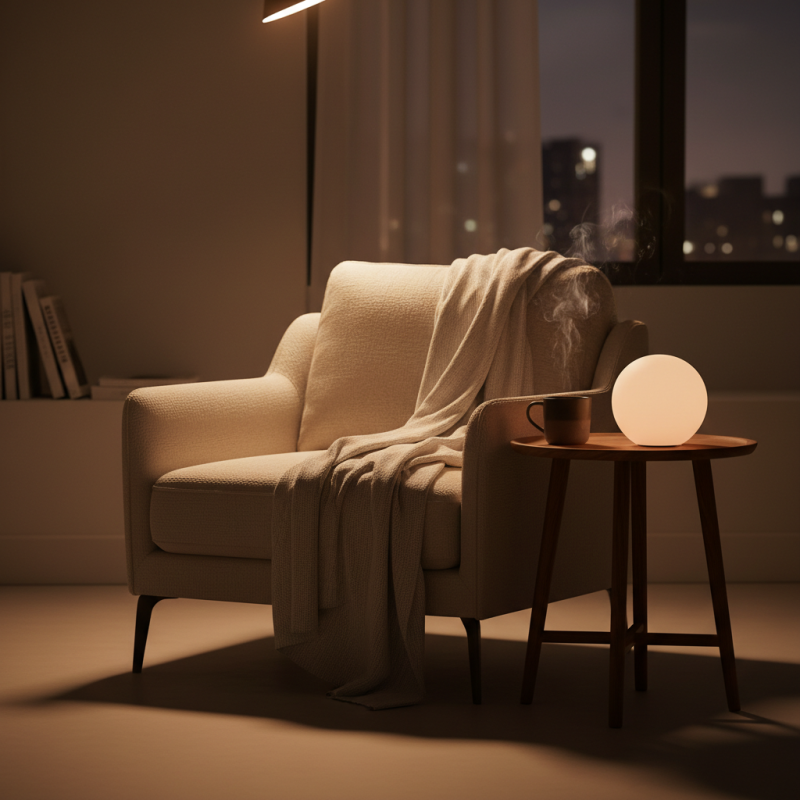
The Unseen Costs of a Rushed Evening
In our always-on world, the line between productivity and burnout has blurred into a frantic dash from one task to the next. The modern predicament is that truly unwinding feels less like a right and more like an unattainable luxury. We’ve all been there: "just one more email," "just a quick scroll," "I'll just finish this one thing." This "slippery slope" mentality leads to a chaotic evening where the brain struggles to disengage, constantly stimulated by screens, notifications, and an internal monologue of tomorrow's to-do list. The result? Daily stressors accumulate, preventing genuine rest and sabotaging sleep quality. This constant state of low-grade stress impacts everything from our mood and relationships to our long-term health, diminishing our overall quality of life.
But what if you could reclaim your evenings? Imagine a deliberate transition from the day's demands to a sanctuary of peace, where stress melts away, and restful sleep is a nightly guarantee. This comprehensive unwinding before bed guide is designed to show you exactly how. We promise to equip you with the best late night relaxation tips and practical strategies to create calm evening ambiance, cultivating profound well-being that extends far beyond bedtime.
Crafting Your Sanctuary: The Art of Creating Calm Evening Ambiance
Your environment is a powerful, often underestimated, tool in the quest for late-night relaxation. Just as a well-designed workspace fosters productivity, a thoughtfully curated evening space can usher in a state of tranquility. Transforming your surroundings is the first, crucial step in learning how to create calm evening ambiance.
Illumination for Tranquility: The Power of Dim Lighting
Think about the harsh fluorescent lights of an office or the piercing glare of a smartphone screen. These light sources signal alertness and can disrupt your body's natural sleep-wake cycle. Why? Because the spectrum of light, especially blue light, actively suppresses melatonin production, the hormone essential for sleep.
Why warm, dim lights are crucial for unwinding: As evening approaches, your body naturally prepares for sleep by increasing melatonin. Exposure to warm, dim lighting, reminiscent of a sunset or candlelight, signals to your brain that it's time to wind down. This promotes a gentle physiological shift towards relaxation, making it easier to drift off later.
Practical tips:
* Dimmers: Install dimmers on overhead lights. Gradually reducing brightness as evening progresses is a simple yet effective strategy.
* Lamps over overheads: Opt for floor and table lamps that cast a softer, localized glow instead of bright, ceiling-mounted fixtures.
* Smart lighting: Invest in smart bulbs (e.g., Philips Hue) that allow you to adjust both brightness and color temperature from your phone, often with pre-set "relax" or "sleep" modes.
* Avoid overheads: Make a conscious effort to switch off bright overhead lighting at least an hour or two before bed.
* Color temperature matters: Look for bulbs with a color temperature around 2700 Kelvin (warm white) or lower, mimicking the calming glow of incandescent bulbs.
By controlling your light environment, you're sending a powerful message to your body that it's time to transition from day to night, setting the stage for deep rest. But light is just one sense; what about what you breathe in?
Scents of Serenity: Harnessing Aromatherapy for Relaxation
The sense of smell is remarkably potent, bypassing conscious thought and directly influencing our limbic system – the brain's center for emotion, memory, and motivation. This "olfactory pathway" means that certain aromas can instantly trigger feelings of calm or memories of comfort.
How smells influence mood and memory: Specific scents can directly impact neurotransmitters, promoting feelings of relaxation, reducing anxiety, and even improving sleep quality. This makes aromatherapy a profound tool in your quest to create calm evening ambiance.
Essential oils for calm:
* Lavender: The quintessential relaxation oil, known for its anxiolytic and sedative properties.
* Chamomile: Gentle and soothing, excellent for easing tension and promoting sleep.
* Bergamot: Uplifting yet calming, it helps reduce stress and improve mood.
* Sandalwood: Earthy and grounding, perfect for meditation and fostering inner peace.
Application methods:
* Diffusers: An ultrasonic diffuser disperses a fine mist of essential oils into the air.
* Rollerballs: Diluted essential oils applied to pulse points (wrists, temples) for direct impact.
* Warm bath: Add a few drops to bathwater for an immersive aromatic experience.
Safe candle use and natural alternatives: While candles can add a warm glow and pleasant scent, always prioritize safety. Opt for soy or beeswax candles with natural essential oils rather than synthetic fragrances. For those sensitive to smoke or looking for an alternative, an essential oil diffuser is an excellent, smoke-free option.
As your space becomes infused with soothing aromas, your mind begins to quiet. And while your nose finds peace, your ears often bear the brunt of a busy day. How can we soothe them?
Sonic Soothing: Curating Your Auditory Landscape
From the incessant hum of traffic to the ping of notifications, our daily lives are often filled with auditory assault. Unsurprisingly, noise can heighten stress, disrupt concentration, and prevent relaxation. Conversely, thoughtfully chosen sounds can act as a powerful balm for the nervous system, helping you to create calm evening ambiance.
The impact of sound on the nervous system: Our brains are constantly processing sound. Chaotic or loud noises activate the "fight or flight" response, keeping us on edge. Gentle, rhythmic, or natural sounds, however, can slow brainwaves, lower heart rate, and promote a state of deep relaxation.
Recommended sounds:
* Gentle music: Classical, ambient, lo-fi, or instrumental pieces without strong rhythms or sudden changes. Look for playlists specifically designed for relaxation or sleep.
* Nature soundscapes: The rhythmic patter of rain, gentle ocean waves, or the soft chirping of crickets can be incredibly grounding and meditative.
* White noise/brown noise: These consistent, low-frequency sounds can mask disruptive background noises, providing a blanket of auditory peace.
Minimizing disruptive noise:
* Soundproofing: Consider heavy curtains, rugs, or even acoustic panels if external noise is a significant issue.
* Earplugs: A simple yet effective solution for blocking out noise, especially if you live in a noisy environment or share a space.
* Designated quiet zones: Encourage other household members to respect certain times or areas as quiet zones.
By consciously curating your auditory environment, you can block out the noise of the day and invite in sounds that lull your mind into a state of peace. Beyond what you hear and smell, your physical environment plays a huge role in comfort. Let's touch on that.
The Embrace of Comfort: Textiles and Touch
Our sense of touch plays a significant role in our perception of safety and comfort. Think about the comforting weight of a warm blanket or the softness of a well-loved sweater. Incorporating these tactile elements is a simple yet effective way to foster a calm evening ambiance.
Investing in cozy elements:
* Blankets: A weighted blanket can provide gentle, even pressure, promoting a sense of security and reducing anxiety. Soft throw blankets made of fleece, wool, or cashmere invite snuggling.
* Pillows: Beyond your sleeping pillow, consider decorative pillows that add softness and visual appeal to your relaxation zone. A body pillow can also provide additional comfort.
* Loungewear: Slip into soft pajamas, a comfortable robe, or plush slippers. The act of changing out of your "day clothes" signals a transition to relaxation.
Creating a physically comfortable space:
* Seating: Designate a comfortable chair or sofa for evening unwinding. Ensure it's supportive and inviting.
* Temperature: Maintain a comfortable room temperature. For many, a slightly cooler room is better for sleep, but for pre-bed relaxation, find what feels best for you.
* Decluttering: A cluttered physical space often translates to a cluttered mind. Spend a few minutes tidying your relaxation area, putting away day-time items. Visual calm promotes mental calm.
By engaging your senses of sight, smell, sound, and touch, you build a multi-sensory cocoon designed to foster profound relaxation. Once your environment is tuned for tranquility, what do you *do* in it to truly let go?
Mindful Engagement: Unwinding Before Bed with Intentional Activities
Creating a serene environment is only half the battle; the other half is filling that space with activities that genuinely help you disconnect and de-stress. These aren't chores; they're invitations to nourish your mind and body as part of your unwinding before bed guide.
The Timeless Pleasure of Reading
In an age dominated by screens, the simple act of picking up a physical book can be a powerful antidote to digital overload. Reading allows your mind to wander into other worlds, providing a much-needed escape from your daily anxieties.
Choosing the right material:
* Fiction: Immerse yourself in a captivating story that transports you away from your own concerns.
* Non-work-related non-fiction: Explore a hobby, learn something new, or delve into a subject that sparks joy, but steer clear of anything that could stimulate problem-solving or anxiety related to work or current events.
* Avoid news and social media: These can trigger stress and pull you back into the "always-on" mentality.
Physical books vs. e-readers (and screen considerations): While e-readers offer convenience, the blue light emitted from backlit screens can interfere with melatonin production. If you use an e-reader, ensure it has a "night mode" or "warm light" setting that filters blue light, and ideally, choose one that isn't backlit but uses ambient light (like Kindle Paperwhite or Oasis). Better yet, embrace the tactile experience of a physical book – the smell of the pages, the feel of the paper, and the absence of glowing screens.
If words can calm, what about words you write yourself?
Reflective Practices: Journaling for Clarity and Calm
Often, the day's stresses linger because we haven't given our thoughts and emotions a proper outlet. Journaling provides a safe, non-judgmental space to process your experiences, turning mental clutter into clarity. It's an excellent late night relaxation tip for emotional release.
Types of journaling:
* Gratitude journaling: Listing things you're grateful for shifts your focus to the positive, fostering a sense of contentment.
* Free-form journaling: Simply writing whatever comes to mind, without structure or concern for grammar, can be incredibly cathartic.
* Brain dump: A quick way to get all your worries, tasks, and ideas out of your head and onto paper, clearing mental space for rest.
Benefits for stress reduction and emotional processing: Journaling helps you identify patterns in your thoughts, gain perspective on challenging situations, and release pent-up emotions. The act of externalizing these thoughts can reduce their power over you, making it easier to let go before bed.
Sometimes, the body holds tension words can't quite release. How can gentle movement help?
Gentle Movement: Light Stretching or Restorative Yoga
You don't need an intense workout to unwind. In fact, strenuous exercise too close to bedtime can be counterproductive, raising your heart rate and body temperature. Instead, focus on gentle movements that release physical tension and calm the mind.
Simple stretches to release tension:
* Neck rolls: Slowly roll your head from side to side to release tension in the neck and shoulders.
* Cat-cow stretch: On hands and knees, arch and round your spine to gently mobilize your back.
* Child's Pose: A deeply restorative pose that calms the nervous system and stretches the hips and lower back.
* Legs-Up-The-Wall: An inversion that helps to relieve tired legs and promotes relaxation.
The principles of restorative yoga for relaxation: Restorative yoga emphasizes long holds in supported poses (using props like bolsters, blankets, and blocks) to encourage deep relaxation and passive stretching. It's about letting go and allowing gravity to do the work.
Benefits for physical and mental unwinding: Gentle movement increases blood flow, releases endorphins, and helps to dissipate accumulated physical tension. The mindful focus on your breath and body during these activities also serves as a form of moving meditation, quieting the busy mind.
And for the deepest release, sometimes all that's needed is to simply *be*. Have you explored the power of stillness?
Cultivating Stillness: Meditation and Breathwork
In our noisy world, true stillness can feel elusive. Yet, learning to sit with your thoughts and control your breath is one of the most powerful late night relaxation tips you can adopt. It's a direct pathway to calming your nervous system.
Guided meditations vs. silent practice:
* Guided meditations: Perfect for beginners, these provide verbal instructions that lead you through relaxation techniques, often focusing on body scans, breath awareness, or visualization. Many apps (Calm, Headspace) offer excellent short evening meditations.
* Silent practice: For those more experienced, simply sitting in silence, observing your breath, and gently returning your focus when your mind wanders can be profoundly grounding.
Simple breathing exercises (e.g., 4-7-8 method):
* 4-7-8 Breathing: Inhale quietly through your nose for a count of four, hold your breath for a count of seven, and exhale completely through your mouth with a "whoosh" sound for a count of eight. Repeat for 3-5 cycles. This technique, popularized by Dr. Andrew Weil, is a natural tranquilizer for the nervous system.
Mindfulness techniques for present moment awareness: Mindfulness is about paying attention, on purpose, to the present moment without judgment. Before bed, you can practice mindfulness by:
* Mindful check-in: Scan your body from head to toe, noticing any sensations, tension, or comfort.
* Sensory awareness: Focus on one sense at a time – the feel of your blanket, the sound of crickets, the scent of lavender.
By purposefully cultivating stillness, you train your mind to let go of the day's incessant chatter and find peace within yourself. Before you settle into that stillness, there's one more ritual that can wash away the day's stress, literally.
The Ritual of a Warm Bath or Shower
There’s something inherently therapeutic about warm water. It's a universal symbol of cleansing and comfort, making a warm bath or shower an ideal component of your unwinding before bed guide.
Physiological benefits of warm water:
* Muscle relaxation: Warm water soothes tense muscles, easing aches and pains.
* Temperature regulation: A warm bath slightly raises your body temperature. As you cool down afterward, this drop in temperature signals to your body that it's time for sleep, mimicking the natural dip that occurs at night.
* Stress reduction: The sensory experience of warm water combined with steam can significantly reduce cortisol levels.
Enhancing the experience:
* Epsom salts: Add magnesium-rich Epsom salts to a bath. Magnesium is known for its muscle-relaxing and stress-reducing properties.
* Essential oils: A few drops of lavender or chamomile essential oil can amplify the relaxing effect (ensure they are properly diluted or added to a carrier oil if adding directly to water).
* Soft towels: Wrap yourself in a warm, plush towel afterward to extend the feeling of comfort and luxury.
* Dim lighting: Combine your bath/shower with the recommended dim lighting for a truly immersive, calming experience.
These activities are powerful, but their impact can be undone by one modern habit we all struggle with: digital overload. How do you disconnect to truly unwind?
Drawing Boundaries: The Essential Digital Detox for Late Night Relaxation
In our hyper-connected world, the biggest saboteur of a peaceful evening is often right in our pockets or on our desks: our digital devices. A crucial aspect of implementing effective late night relaxation tips is establishing firm boundaries with technology.
Understanding the "Always On" Culture's Impact
Our reliance on smartphones, tablets, and computers extends far beyond work hours, creating an "always on" culture that makes it incredibly difficult to switch off.
The detrimental effects of blue light on sleep: Screens emit blue light, which, as discussed earlier, actively suppresses melatonin production. Exposing your eyes to blue light close to bedtime essentially tells your brain it's still daytime, disrupting your circadian rhythm and making it harder to fall asleep and achieve quality rest.
The psychological pull of notifications and social media: The constant stream of notifications, emails, and social media updates creates a subtle but persistent psychological pull. Each "ding" or "buzz" is a tiny jolt, keeping your brain engaged and vigilant. The fear of missing out (FOMO) or the urge to "just check one more thing" can turn minutes into hours, robbing you of precious relaxation time. This continuous partial attention prevents deep relaxation and genuine mental disengagement.
So, knowing the problem, what are the concrete steps to break free?
Practical Strategies for Disconnecting
Breaking the digital habit requires intention and discipline, but the benefits are profound.
Setting a "digital curfew": Decide on a specific time each evening (e.g., 60-90 minutes before your desired bedtime) when all non-essential screens go off. Treat it as a non-negotiable boundary.
Charging devices outside the bedroom: The bedroom should be a sanctuary for sleep and intimacy, not a charging station or a workstation. Charging your phone in another room eliminates the temptation to check it "just one last time" and removes the distracting glow.
Establishing screen-free zones: Designate certain areas of your home, like the dining table or your dedicated relaxation nook, as screen-free zones. This reinforces the idea of specific spaces for specific activities.
Replacing screen time with mindful activities: The key to successful digital detox isn't just *removing* screens, but *replacing* them with the intentional activities discussed earlier. Instead of scrolling, read a book, journal, listen to music, or engage in quiet conversation.
The effort of unplugging yields profound rewards. Let's uncover them.
The Benefits of a Digital Pause
Stepping away from screens offers a wealth of advantages for your mental and physical well-being.
* Improved sleep quality: Reduced blue light exposure allows natural melatonin production to kick in, leading to faster sleep onset and more restorative sleep.
* Reduced anxiety and stress: Disconnecting from the constant stream of information and demands significantly lowers stress and anxiety levels, fostering a calmer mind.
* Enhanced presence and connection: Without digital distractions, you become more present in your own life, better able to connect with loved ones, and more attuned to your own thoughts and feelings.
* Greater creativity and introspection: The quiet space created by a digital detox allows for deeper reflection, problem-solving, and creative thinking.
These strategies are not just one-time fixes; they're a lifestyle. How do you make them stick?
Sustaining Your Serenity: Consistency and Personalization
Implementing new routines can be challenging, but consistency is key to transforming occasional acts of unwinding into deeply ingrained habits that yield lasting benefits. This final section of our unwinding before bed guide focuses on making these practices a sustainable part of your life.
Building a Habit: The Power of Routine
Your body and mind thrive on routine. Just as you have a morning routine, an evening routine signals to your system that it's time to shift gears and prepare for rest.
* Starting small and gradually expanding: Don't try to implement every single tip at once. Choose one or two late night relaxation tips that resonate most with you and commit to them for a week. Once they feel natural, gradually add more elements to your routine.
* The importance of consistency for long-term benefits: Performing these activities regularly, even on weekends or busy nights, reinforces the habit. Your body's internal clock will begin to anticipate these cues, making the transition to relaxation smoother and more effective over time. Stick with it, even when motivation wanes, as consistency is the bedrock of habit formation.
But what works for one person might not work for another. How do you make this ritual uniquely *yours*?
Tailoring Your Ritual: Listening to Your Needs
While this guide offers a comprehensive framework, your perfect calm evening ambiance and unwinding routine will be unique to you.
* Experimenting with different elements to create your perfect calm evening ambiance: Try different scents, sounds, and lighting levels. What kind of tea truly relaxes you? Which reading genre captivates your imagination? Don't be afraid to mix and match elements to discover what resonates most deeply with your personal preferences and needs.
* Adapting the routine based on energy levels and daily stress: Some evenings you might have more energy for a long bath and journaling, while others might call for a quick stretch and an early bedtime with a book. Be flexible and compassionate with yourself. The goal is relaxation, not rigid adherence.
* Making it enjoyable, not a chore: Your evening routine should be something you look forward to, not another item on your to-do list. Frame it as self-care, a precious gift you give yourself each day. If an activity feels like a chore, replace it with something you genuinely enjoy.
The journey to a more peaceful evening isn't just about ending your day better; it's about transforming your entire life.
Embrace the Evening, Transform Your Life
We've journeyed through the comprehensive unwinding before bed guide, exploring how to transform chaotic evenings into havens of peace. From strategically adjusting your environment to create calm evening ambiance with thoughtful lighting, soothing scents, and curated sounds, to engaging in mindful activities like reading, journaling, gentle movement, and meditation, every step is designed to help you de-stress. Crucially, we've emphasized the vital role of a digital detox for late night relaxation, drawing firm boundaries with screens to reclaim your mental space.
The profound impact of these late night relaxation tips extends far beyond simply getting more sleep. By consistently nurturing your evening ritual, you'll experience reduced daily stress, enhanced emotional regulation, improved overall well-being, and a renewed sense of presence in your life. This isn't just about ending your day; it's about making a conscious choice to live more fully, to prioritize your peace, and to embrace the quiet beauty of the evening.
It's time to stop letting your evenings slip away. Take control, implement these strategies, and discover the transformative power of your own perfect late-night sanctuary. Your well-rested, calmer self will thank you.